
Across Rakuga play, the average time until a correct guess is 30.7 seconds. That figure does not describe a quiet wait for a finished picture. A successful round is a rapid exchange. The drawer reveals a category through shapes and context, while guessers continually update what they think the image might become.
The most useful way to understand those 30.7 seconds is as a chain of narrowing decisions. A circle opens many possibilities. Ears turn it toward an animal or face. A body below it removes planet and clock. A tail, environment, or action can finally separate one answer from its neighbors. Every mark should reduce uncertainty.
The first line creates a category
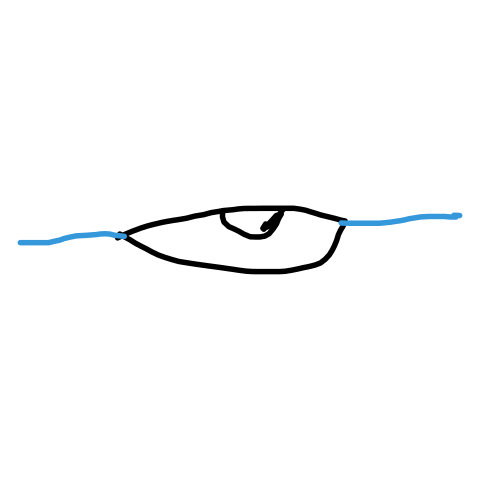
Drawers often treat the opening as setup, but guessers are already reading it. A horizontal line may become ground, a table, water, or part of an object. A circle may become a head, wheel, fruit, sun, plate, or ball. The first mark rarely gives the answer, yet it establishes the visual space where later marks will be interpreted.
That makes size and placement important. A large central circle announces that the object itself matters. A small circle above a body suggests a person. The same circle near the corner with rays around it becomes scenery. Before adding detail, the drawer has already communicated through composition.
A good opening is confident and reversible. Use a broad outline that leaves room around it. If players head toward the wrong category, add a strong contextual element rather than erasing everything. A ground line, hand, container, or motion mark can redirect the room faster than starting again.
Guessing should be incremental
Waiting until the picture looks complete feels careful, but it gives up the main advantage of being a guesser. Early guesses test categories. If a round begins with a curved body and a triangle, try an animal, vehicle, or object that fits. The next stroke may confirm one direction and close the others.
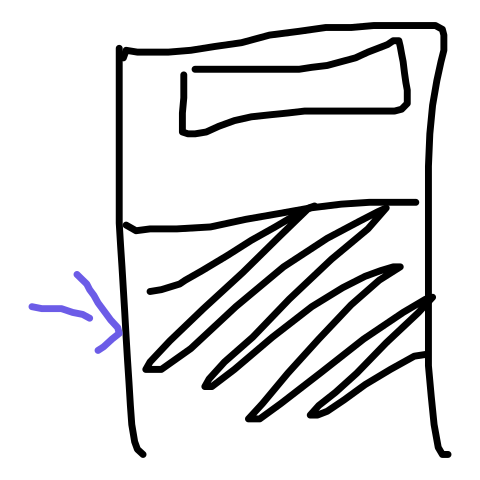
Incremental guessing does not mean typing random words. Each answer should respond to visible evidence. Begin broad, then move toward specific neighbors. A box with a window may suggest a screen. Hinges can shift that toward a laptop. Hands above the lower half make that interpretation stronger. Your guesses should track those changes.
Also notice what the drawer chooses to emphasize. An oversized handle probably distinguishes a tool. Repeated waves may make water essential rather than decorative. A tiny figure beside a huge object can communicate scale. The strange proportions in a quick sketch are often intentional clues.
Why a polished drawing can be slower
Detail helps only after the category is visible. If the drawer carefully colors an unclear rectangle, the image remains an unclear rectangle. Texture, shadows, and neat borders consume time without excluding many wrong answers. The strongest marks show function, setting, or movement.
Consider a chair. A polished seat cushion does less work than a person sitting on it. For a key, a hand turning it in a lock is stronger than metallic shading. For rain, falling lines under a cloud create the relationship immediately. Meaning comes from how shapes connect.
Clear drawings are often built in layers. First comes the subject. Next comes the distinguishing feature. Then comes context. Decoration belongs at the end, if it is needed at all. This order gives guessers useful information throughout the round instead of delivering everything at once.
Reading silence in the room
When guesses stop, the drawer has received valuable feedback. Silence usually means the category is unclear or the room has exhausted its current interpretation. Repeating the same shape more neatly will rarely help. Change the kind of information on the canvas.
If the object is floating alone, add a person using it. If the action lacks a setting, add the surface or equipment that makes the movement specific. If the drawing could belong to several categories, add a contrast object. A moon beside a sun clarifies time. A small cup beside a larger container clarifies scale and use.
Wrong guesses can be even more useful than silence. They reveal which clue players are following. If everyone sees a boat when the answer is another water object, keep the water but add the feature that separates the target. The room is not lost. It has already reached the right neighborhood.
How drawers can use the average
The 30.7-second average is not a deadline to beat at any cost. It is a reminder that recognition develops while the picture is being made. Drawers should plan a short visual sentence: subject, defining trait, context. Put each part down as soon as it can help.
Before drawing, identify the easiest wrong answer. If a canoe might look like a banana, water and a paddle should appear early. If a blanket might look like paper, show it covering a bed. If an action could look like general movement, draw the equipment or destination that makes it specific.
Use the chat as a live reading of your image. You cannot answer with written hints, but you can observe the direction of guesses. When several people land on related words, preserve what worked and add a differentiator. When guesses scatter, establish the category again with a large, simple symbol.
How guessers can use the average
Guessers should stay active without flooding the chat. Name what the first shape could represent, then revise as new evidence arrives. Think in families: animal, food, tool, place, action, or person. Once the family becomes clear, look for the feature that makes the answer unique.
Pay attention to sequence. The first object is often the subject, while later objects explain it. A figure followed by a ball suggests an activity. A cloud followed by falling marks suggests weather. A box followed by controls suggests a device. Order can reveal which part deserves the noun.
Do not become attached to a clever guess. A new clue may disprove it immediately. Fast players discard old interpretations without frustration. They keep the parts that still fit and replace the rest. The drawing is a changing argument, not a hidden picture that must be viewed all at once.
A useful rhythm for every round
The drawer's rhythm is outline, distinction, context, correction. The guesser's rhythm is category, candidate, revision, answer. Those two rhythms meet when the visual information becomes specific enough to name. The fun lies in watching that shared understanding form in real time.
Thirty seconds can feel short when someone is trying to make art. It feels generous when a group is exchanging clues and testing ideas. Draw the information that matters first. Guess from evidence as it appears. A rough picture that changes minds is more effective than a beautiful picture that arrives too late.
Practice the rhythm in a live room.
🎨 Play Rakuga