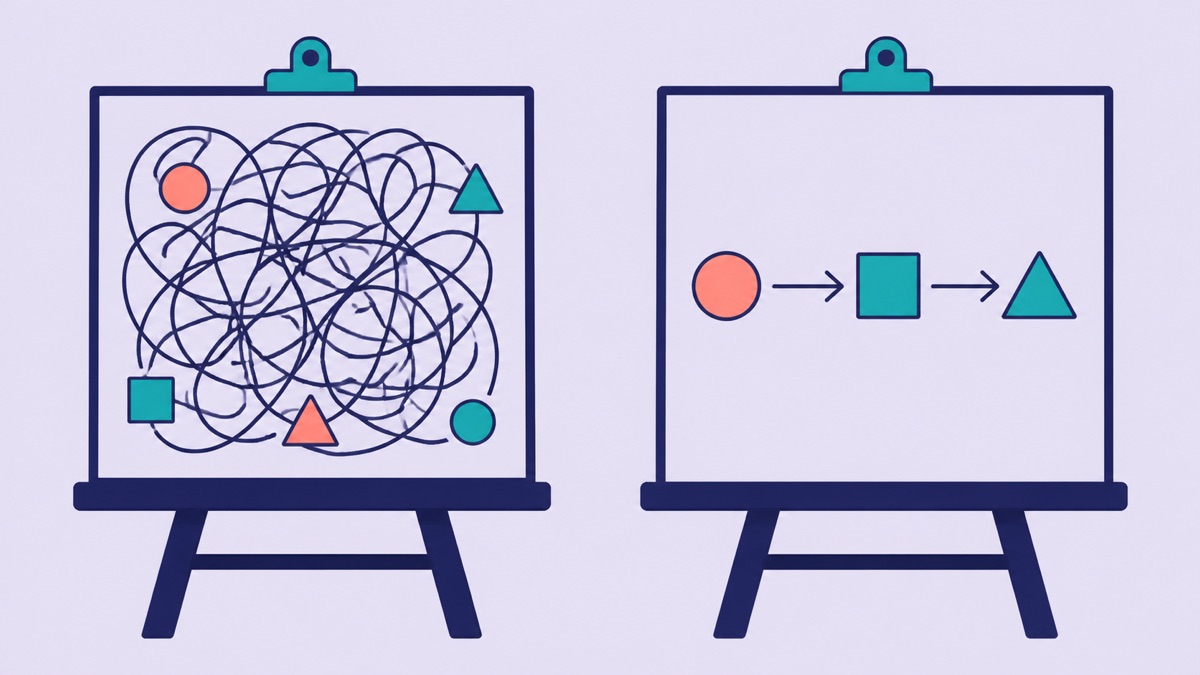
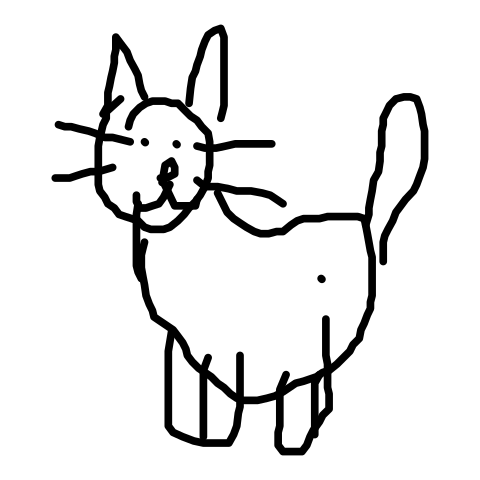
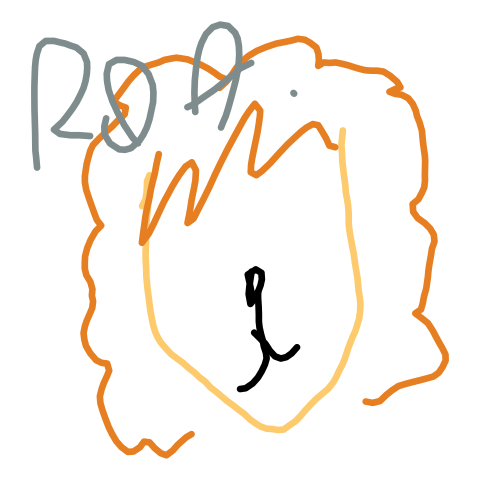
A strong drawing clue is not a miniature illustration. It is an ordered argument. Each mark should move guessers from a broad category toward one specific answer. The drawer decides what information appears first, what alternatives need to be eliminated, and how to recover when the room reads the picture differently.
That means composition matters as much as drawing skill. A tiny correct object in the corner may fail, while a large rough silhouette with a clear relationship can succeed. Plan the clue as a sequence: subject, defining feature, context, then correction.
Object first or context first?
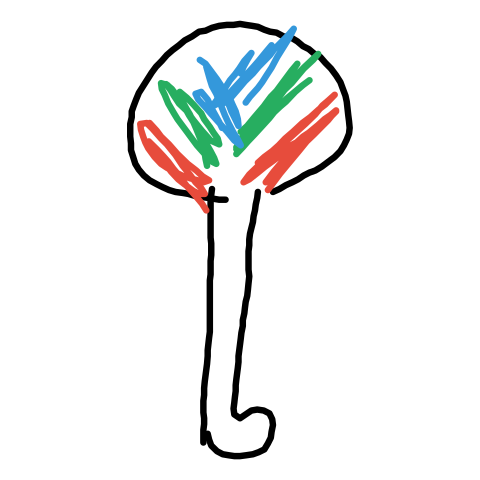
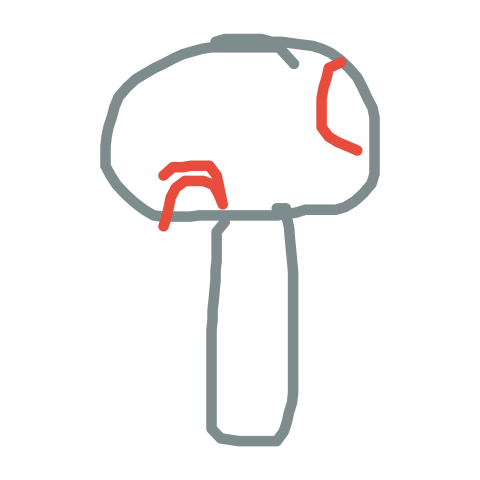
Start with the object when its silhouette is distinctive. A long handle with a heavy head quickly suggests a tool. A round body with a triangular tail quickly suggests a fish. Put the subject near the center, draw it large, and add the feature that separates it from close alternatives.
Start with context when the object is visually generic. A towel, blanket, screen, or island can begin as a rectangle or shapeless patch. The place or use may carry more meaning than the outline. Draw a rail before the towel, a bed beneath the blanket, hands over the laptop, or water around the island.
For actions, context often comes first. A person bending could be stretching, searching, tying a shoe, or falling. A mat, object, slope, or destination narrows the verb. The body then shows how the action happens.
Establish the category
Guessers need to know whether they are looking at an animal, person, object, place, or action. Use familiar visual grammar. Eyes and limbs imply a living subject. Ground, horizon, and several objects imply a place. Motion lines and changed body positions imply an action.
Do not confuse category with answer. A generic cat shape can establish animal, but it may not name the exact target. Once guessers enter the right family, add the distinctive ears, tail, pattern, size comparison, habitat, or behavior that selects the answer.
Watch the guesses. If players submit many related animals, the category worked. Preserve it and add differentiation. If guesses scatter across unrelated things, reinforce the category with a clearer body, setting, or person using the object.
Use scale intentionally
The main clue should occupy enough space to remain readable on a phone. Tiny shapes lose their distinctive features. Leave margins for context, but do not reserve most of the canvas for a scene you may never need.
Relative scale can itself be a clue. A person beside a large object establishes size. A smaller cup beside a large container separates similar shapes. Exaggeration is useful when it communicates function. An oversized handle or tail may look unrealistic but makes the distinction visible.
Keep background elements subordinate. A huge decorative sun can attract guesses away from the actual subject. Use smaller, simpler marks for setting unless the place is the answer.
Show function, not surface detail
Texture and color often feel productive because they make the drawing look finished. They rarely explain what a generic object does. A hand turning a key is stronger than metallic shine. A person sitting on a chair is stronger than cushion stitching. Rain falling from a cloud is stronger than carefully shaded gray.
Function creates relationships, and relationships narrow meaning. Ask who uses the object, what it touches, where it belongs, and what changes when it is used. Choose the easiest relationship to draw with simple shapes.
Color is valuable when it is truly distinctive or when it separates parts. Otherwise, use it late. A clear black outline and one contextual object usually beat a colorful but ambiguous silhouette.
Compose actions as scenes
An action needs an actor, movement, and often an object or destination. Angle the body so the pose reads at a glance. Bend joints, lift feet from the ground, and add motion lines in the direction of travel.
If a single pose remains vague, show before and after. Put a closed object on one side and an open object on the other. Show a person at a starting point and again at a destination. The contrast communicates change without written explanation.
Avoid filling the canvas with several equally important characters unless the relationship requires them. More figures create more possible stories. Use the smallest scene that makes the verb specific.
Respond when nobody guesses
If the chat stays quiet, add a new type of clue. Do not redraw the same outline more neatly. The problem is likely interpretation, not line quality. Add setting if the object floats alone. Add use if the shape is generic. Add a contrasting neighbor if the category is too broad.
If players guess the same wrong answer, treat it as useful feedback. They have identified something your drawing communicates. Keep the shared features and add the one difference between their answer and the target. Erasing everything throws away the progress.
If guesses are all over the place, simplify. Reinforce the subject with a larger outline or familiar category symbol. Remove or ignore decorations that attract attention. A fresh, bold mark can reset the visual hierarchy.
What to do after twenty seconds
When the clue has not landed after twenty seconds, stop polishing. Ask yourself three quick questions. Do they know the category? Do they know the setting? Have I shown the feature that rules out the most obvious wrong answer?
Choose whichever answer is missing and draw it immediately. For category, add a face, body, building frame, or ground. For setting, add water, road, room, sky, or surface. For distinction, exaggerate the defining part and show how it connects.
The time marker is not a reason to panic. It is a trigger to change strategy. A late contextual clue can still unlock the whole picture because guessers reinterpret earlier marks once the relationship becomes clear.
Use wrong guesses as a map
Related wrong guesses show the room's current category. If people name several instruments, emphasize how the target is held or played. If they name different vehicles, add the environment or specialized equipment. If they name places, make the central object more prominent.
Unrelated wrong guesses suggest visual ambiguity. Check whether two shapes accidentally overlap, whether the main subject is too small, or whether a background item looks dominant. Add separation and a clear interaction rather than more objects.
Fast drawers keep adapting. They do not defend the image in their head. They respond to the image the room is actually seeing.
A simple planning habit
Before the first mark, name three things silently: category, closest wrong answer, and strongest context. If the target is a violin, the category is instrument, a close wrong answer is guitar, and the strongest context is a bow held beside the body. That tiny plan determines the order.
Draw category first when the family is unclear. Draw the distinctive feature first when the silhouette is strong. Draw context first when the object is generic. There is no universal opening, only the opening that removes the most uncertainty.
Finish as soon as the clue works. More marks can introduce new ambiguity. A successful drawing is not the fullest canvas. It is the shortest clear path from hidden word to shared understanding.
Practice clearer clue sequences.
🎨 Play Rakuga