
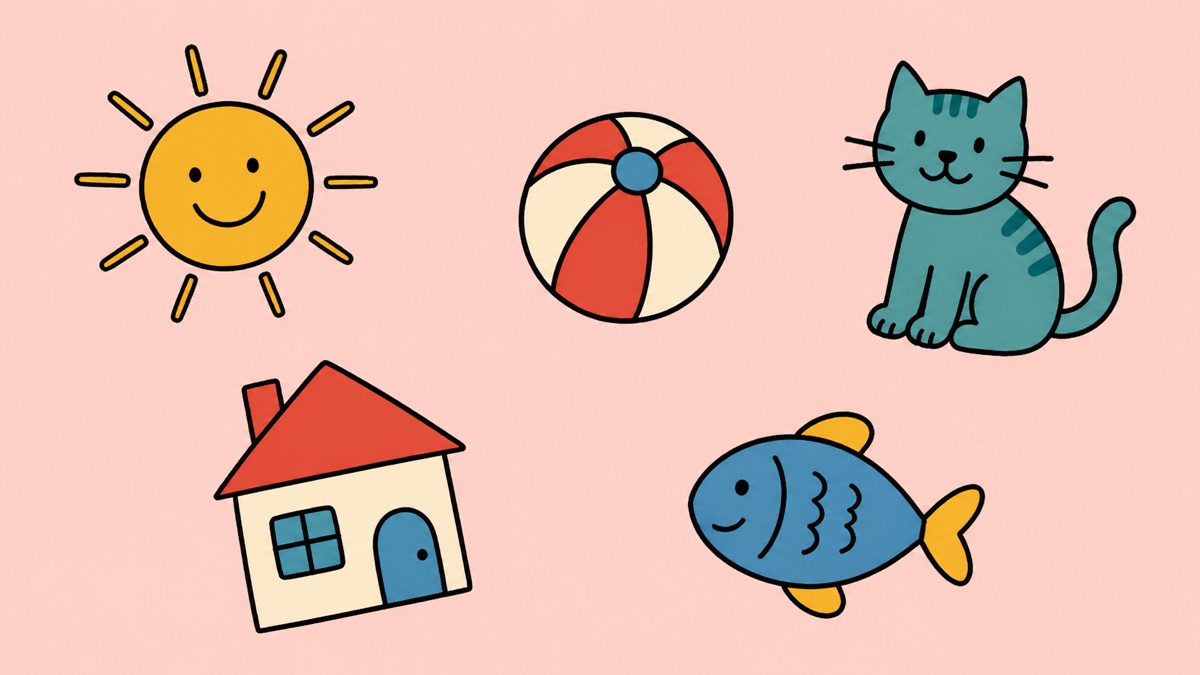
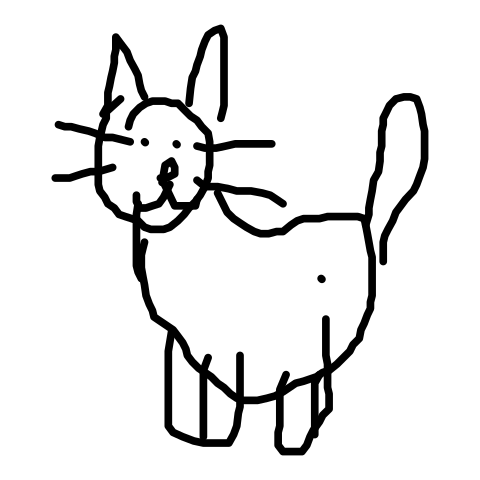
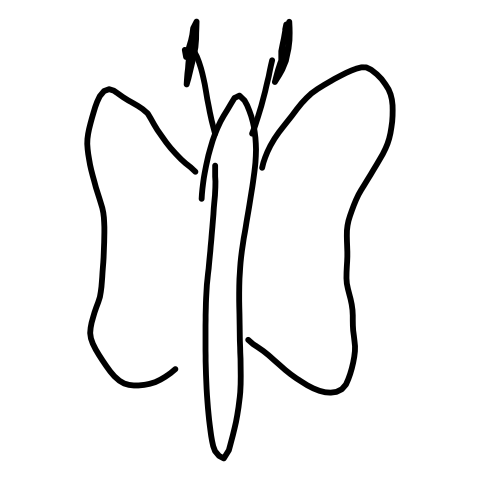
A good prompt for a child is easy to begin but open enough to become personal. Familiar animals, food, weather, toys, places, and silly scenes work well because children already know the main shapes. They can focus on expressing an idea instead of worrying about the correct way to draw.
Use these prompts for family game night, classroom warmups, party activities, or quiet sketching. They were composed as a general activity list, independent of any game's prompt collection. Pick a theme that suits the group and let children add details after the main idea is clear.
Sky and weather
Tip: Begin with the largest shape in the sky, then add ground or people to show what the weather is doing.
- Smiling sun
- Moon behind a cloud
- Rainbow over a hill
- Raindrops on an umbrella
- Snow falling on a house
- Wind blowing a hat
- Cloud shaped like an animal
- Lightning over a tree
- Puddle with a reflection
- Kite in a breeze
- Stars above a tent
- Fog around a castle
- Sunrise at the beach
- Leaf spinning in the wind
- Rain boots in mud
Animals and pets
Tip: Use circles and ovals for bodies, then exaggerate ears, tails, wings, shells, or spots.
- Cat in a cardboard box
- Dog chasing a ball
- Rabbit eating a carrot
- Fish blowing bubbles
- Duck in a pond
- Turtle wearing a cap
- Butterfly on a flower
- Frog on a lily pad
- Bird building a nest
- Snail under a leaf
- Mouse beside cheese
- Horse jumping a log
- Penguin sliding on ice
- Crab holding a shell
- Sheep with a fluffy coat
Food and kitchen fun
Tip: Show food on a plate, in a bowl, or being prepared so its size and purpose are obvious.
- Stack of pancakes
- Birthday cake with candles
- Apple with a leaf
- Banana wearing sunglasses
- Ice cream melting
- Sandwich with a face
- Bowl of colorful fruit
- Cookie beside a glass
- Popcorn jumping from a bowl
- Carrot growing underground
- Pizza shaped like a heart
- Cup of warm cocoa
- Chef mixing a bowl
- Picnic basket on grass
- Funny vegetable family
Toys and playful objects
Tip: Add a hand, child, shelf, or playroom floor to turn a simple shape into a recognizable toy.
- Teddy bear at a tea party
- Toy train crossing a bridge
- Building block tower
- Yo-yo going down
- Jump rope in motion
- Paper airplane flying
- Drum with music notes
- Puzzle with a missing piece
- Rocking horse
- Balloon tied to a chair
- Marbles in a bag
- Robot holding a flower
- Boat in a bathtub
- Puppet behind a curtain
- Spinning top on a table
Places and little adventures
Tip: Draw the setting first, then add one character doing something that tells a tiny story.
- Treehouse with a ladder
- Sandcastle near the sea
- Cozy reading corner
- Playground with a slide
- Garden full of flowers
- Cabin in the woods
- Bridge over a stream
- Farm with a red barn
- Library with tall shelves
- Campfire under the stars
- Secret door in a wall
- Path through a maze
- Small shop for animals
- Bedroom on a spaceship
- Island with one palm tree
How to choose prompts for a group
Start with concrete subjects when children are new to drawing games. An animal beside a familiar object gives the drawer a clear first step and gives guessers more than one route toward the idea. Move toward scenes once the group is comfortable with basic shapes.
Let children skip a prompt that makes them uncomfortable or stuck. Offer another from the same theme rather than turning the choice into a public discussion. The purpose is participation, not proving that every child can solve every idea.
For younger groups, read prompts aloud or pair children with a helper. The helper can repeat the words and operate a device, but the child should decide what appears in the picture. Broad markers and large canvases make control easier.
Make every prompt easier to draw
Ask three questions before starting: What is the biggest shape? What detail makes the subject special? Where is it happening? A child drawing a rabbit might begin with an oval body, add long ears, then place a carrot nearby. That is already a complete visual clue.
Encourage exaggeration. A giant tail, bright sun, tall stack, or dramatic puddle makes the intended idea visible. Realistic proportions are not necessary in a guessing game. The picture succeeds when another person understands it.
If a scene feels crowded, choose the main subject and one supporting detail. A cat, box, and pair of eyes can tell the whole story. Extra furniture may distract from the idea. Simple composition helps children finish with confidence.
Use the list beyond guessing games
Turn one prompt into a story by asking what happened before and what happens next. Combine two prompts to make a surprising scene. Ask partners to draw the same prompt, then notice how different choices can communicate the same words.
Children can also invent a new item for each theme. Give the new prompt to someone else and see whether it is clear enough to draw. Creating prompts teaches the same communication skill as drawing them.
Keep the mood generous. Praise a useful clue, an interesting decision, or a brave attempt. Easy prompts are starting points, not tests. The best drawings leave space for a child to add humor, color, and a point of view.
Use the ideas in a private room.
🎨 Play Rakuga